 By admin
It is quite difficult to label a platform as social media or reject it when we use it in our daily life for entertainment and at the same time, for social interactions too! Some people treat it like a social media app, others see it as just a place to watch videos, and many fall somewhere in between.
This is why the question “Is YouTube considered social media?” keeps coming up. It is way too difficult to answer it contrary to what folks believe, because YouTube combines video sharing, video advertising, audience interaction, and community features in a way that overlaps with both social media and entertainment platforms.
- Is YouTube Considered Social Media? (Straight Answer)
- What Counts as Social Media?
- So, What Type of Platform Is YouTube?
- How YouTube’s Algorithm Makes It Feel Different
- Where YouTube Matches Social Media
- Where YouTube Feels Different From Social Media
- YouTube vs Typical Social Media Platforms
- Does YouTube Actually Have Social Features?
- Practical Tips to Build Social Interaction and Community on YouTube
- Final Verdict: Does YouTube Count as Social Media?
- FAQs About Is YouTube Considered Social Media
Is YouTube Considered Social Media? (Straight Answer)
If you’re looking for a simple answer, yes. YouTube is considered social media. But that doesn’t tell the whole story.
With over 2.5 billion users, a lot of people still ask things like is YouTube a social media platform, or a video platform, or even does YouTube count as social media at all, because it doesn’t behave like the apps we usually group together. You don’t open it to check messages or post quick updates. Most of the time, you’re just watching something.
That’s where the confusion comes from. So while the short answer is yes, the better way to understand it is this:
“YouTube fits into social media, but it doesn’t feel like traditional social media in everyday use.”
So, you should delete your social apps and stick to it now? Well, even though there are several benefits of deleting social media apps and using YouTube itself, there are still some features that you might miss if you are too much into social interactions. Read more so you will learn why YouTube differs from complete social platforms.
What Counts as Social Media?
Before deciding where YouTube stands, it helps to understand the basics. A typical social media platform definition revolves around three simple ideas:
- People create content.
- They share it.
- Others interact with it.
That interaction is what turns a normal website into something social. If you look at common examples of social media platforms, they all follow this pattern. Whether it’s posting photos, writing updates, or sharing videos, the key part is always the same.
That’s really what counts as social media. It’s not just about content being there. It’s about what people do with it.
And once you look at it that way, the question becomes less about labels and more about behavior.
So, What Type of Platform Is YouTube?
On YouTube, 500+ hours of video are uploaded every minute, which makes it one of the most interactive platforms. And now comes the part that causes most of the debate. If someone asks, “What type of platform is YouTube?”, there isn’t a one-word answer. It sits across multiple categories at once.
At its core, YouTube is one of the biggest video-sharing platforms on the internet. It also works as a content-sharing platform, where creators upload and distribute videos regularly. That puts it alongside other content-creator platforms and large content-distribution platforms.
At the same time, it belongs to a wider group of media-sharing websites and digital media platforms that focus on delivering content rather than direct messaging.
This is why the platform classification debate exists. YouTube doesn’t fit neatly into either side of the social networking vs content platforms discussion. It overlaps both.
How YouTube’s Algorithm Makes It Feel Different
Most social media apps are built around people. YouTube flips that completely.
Instead of showing you content from people you know, YouTube studies:
- What you watch
- How long you watch it
- What you click next
Based on that, it keeps suggesting more videos. Over time, your feed becomes highly personalized.
This is why YouTube feels more like a content engine than a social network. It also explains the difference between content consumption and interaction. On YouTube, watching is the main activity. Interaction comes second. On platforms like Instagram or Facebook, it is usually the other way around.
That does not mean YouTube lacks social features. It just means they are not the starting point. The platform first pulls you in through content, and then gives you ways to interact if you choose to.
This is also why many people see YouTube as one of the strongest algorithm-based platforms rather than a typical social networking site.
Where YouTube Matches Social Media
Even though it feels different, there are clear reasons why YouTube is social media.
People Create and Share Their Own Content
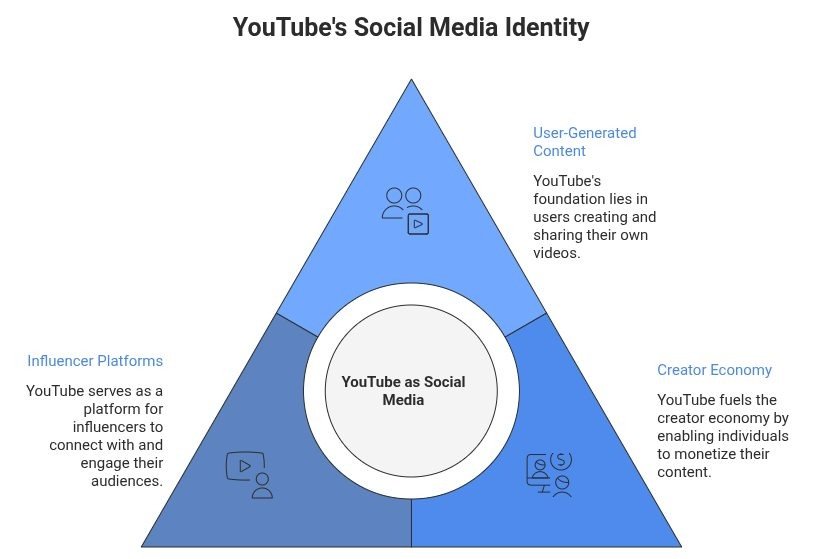
YouTube is built on the same foundation as most modern platforms: users create the content.
It’s part of a larger shift toward user-generated content platforms, where anyone can upload something and reach an audience. This is also what drives today’s creator economy platforms and influencer platforms.
That alone puts YouTube in the same space as other video-based social platforms, even if the format is different.
Interaction Through Comments and Engagement
YouTube may not be centered around chatting, but it still allows social interaction online through likes, replies, and discussions. These built-in commenting and engagement systems are what keep content active after it’s posted.
If you’ve ever seen a viral video with thousands of comments, you already know how strong those social engagement features can be.
So when people ask “Does YouTube have social features?”, the answer is clearly yes. They just show up differently compared to typical social apps.
Subscribers and Ongoing Audience Relationships
Instead of adding friends, YouTube works through subscriptions. That makes it one of the most recognizable subscriber-based platforms, where people follow creators rather than individuals they know personally. Over time, this builds a steady creator audience relationship.
This is also where YouTube starts to feel like a community platform. Channels grow into community-driven platforms, and viewers return regularly, not just for content, but for the creator behind it.
Where YouTube Feels Different From Social Media
At the same time, there are solid reasons why YouTube is not social media, at least in the way people usually think.
More Watching Than Interacting
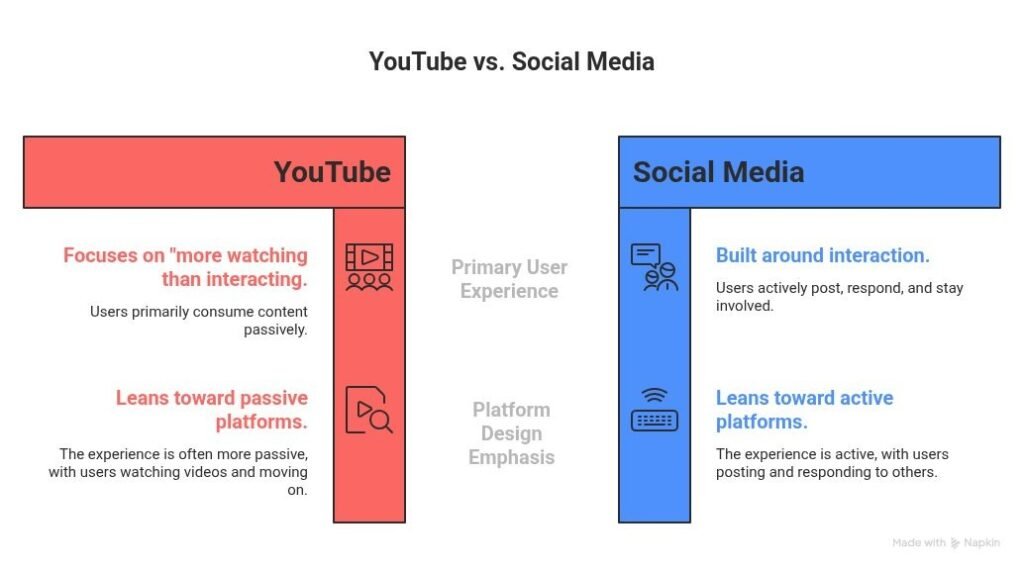
One of the biggest differences is how people use it. Most social apps are built around interaction. You post something, respond to others, and stay involved. On YouTube, the experience is often more passive.
You open the app, watch videos, and move on. That shift highlights the difference between content consumption vs interaction and shows how YouTube leans toward passive vs active platforms.
This is one reason people feel YouTube is different from social media, even if it technically qualifies.
Entertainment Over Personal Connection
Another major factor is purpose. YouTube often feels like entertainment first. It’s closer to a streaming experience than a communication tool. That’s why the question of whether YouTube is a social media platform or an entertainment platform comes up so often.
Unlike apps built for personal updates or conversations, YouTube is not focused on direct relationships between users. It’s more about watching, learning, or being entertained.
This is also where the difference between YouTube and social media becomes more noticeable in daily use.
YouTube vs Typical Social Media Platforms
When people compare YouTube with other platforms, the difference becomes easier to see.
On apps like Facebook or Instagram, the focus is on people you know. You post something, friends react, conversations happen quickly, and things move fast. That is the usual idea behind social apps vs media platforms.
YouTube works in a different way. You are not really connecting with friends. You are watching creators. That is why the discussion around YouTube vs. social media platforms keeps coming up. The experience feels less personal and more content-driven.
At the same time, it still fits into a wider group of online content ecosystems where people gather around shared interests instead of personal connections.
Does YouTube Actually Have Social Features?
A lot of people underestimate this part. If you only watch videos, you might think there is nothing social about it. But once you start looking closely, you notice a full set of audience interaction tools built into the platform.
Comments and Conversations
The comment section is where most of the activity happens. People react, argue, agree, and sometimes even build long threads. These are real forms of social interaction online, even if they are centered around content instead of personal updates.
This is one of the clearest answers to “Does YouTube have social features?” It does, and they are used heavily.
Community Posts and Updates
Then there is the community posts feature. Creators can share updates, polls, and short messages without uploading a full video. This brings YouTube closer to what you see on traditional social media.
It also helps strengthen the connection between creators and viewers, making it feel more like a community space rather than just a video platform.
Live Streams and Real-Time Interaction
Live streaming is another way of social interaction. During live sessions, viewers can respond instantly, creating real-time interaction. This kind of live streaming interaction is one of the strongest social elements on the platform.
At that point, it starts to feel very similar to other interactive platforms where engagement happens instantly instead of after the fact.
Practical Tips to Build Social Interaction and Community on YouTube
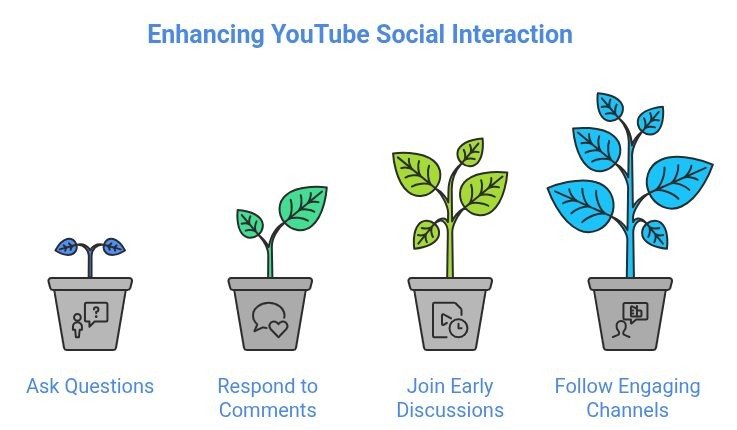
Whether you are a creator or a viewer, these habits will help create more social interactions.
- Ask questions instead of posting statements
- Respond to comments
- Join discussions early when a video is recently uploaded
- Follow channels that encourage engagement
These small actions turn YouTube from a passive platform into something much closer to social media.
Communities form around shared interests, not random uploads. The more focused your topic is, the easier it becomes for people to connect.
Pay attention to your audience. Read comments carefully. Notice what people are asking or repeating. When you respond to those patterns in future content, people feel heard.
Finally, focus on connection, not just views. Viral videos can bring attention, but consistent interaction builds long-term communities.
Final Verdict: Does YouTube Count as Social Media?
So, does YouTube count as social media? Yes, it does. But it is not the same as platforms built around personal interaction. It focuses more on content, discovery, and audience relationships.
That is why the question “Is YouTube considered social media?” keeps coming up. People expect it to behave like other apps, but it follows a different pattern.
The simplest way to look at it is this. YouTube is part of social media, but it is also something more. It blends content, community, and interaction into one system that does not fit perfectly into any single category. And that is exactly what makes it different.
FAQs About Is YouTube Considered Social Media
1: Is YouTube Considered Social Media or just a Video Platform?
YouTube is both. It started as a video-sharing platform but now includes social media characteristics like comments, subscriptions, and community posts.
2: Is YouTube more a Social Media or an Entertainment Platform?
YouTube is often seen as both. It depends on usage. Some people treat it as entertainment, while others use it like a social platform. However, it is more of an entertainment platform.
3: Is YouTube like Facebook or Instagram?
Not exactly. Facebook and Instagram focus more on personal connections, while YouTube focuses on content and creator audience relationships.
4: Can YouTube be used as a Social Network?
Yes, but in a limited way. It works more through communities and creators rather than direct personal networking.